Artist UUendy Lau Redefines Tsuen Wan’s Textile Memory Through Speculative Visual Archive
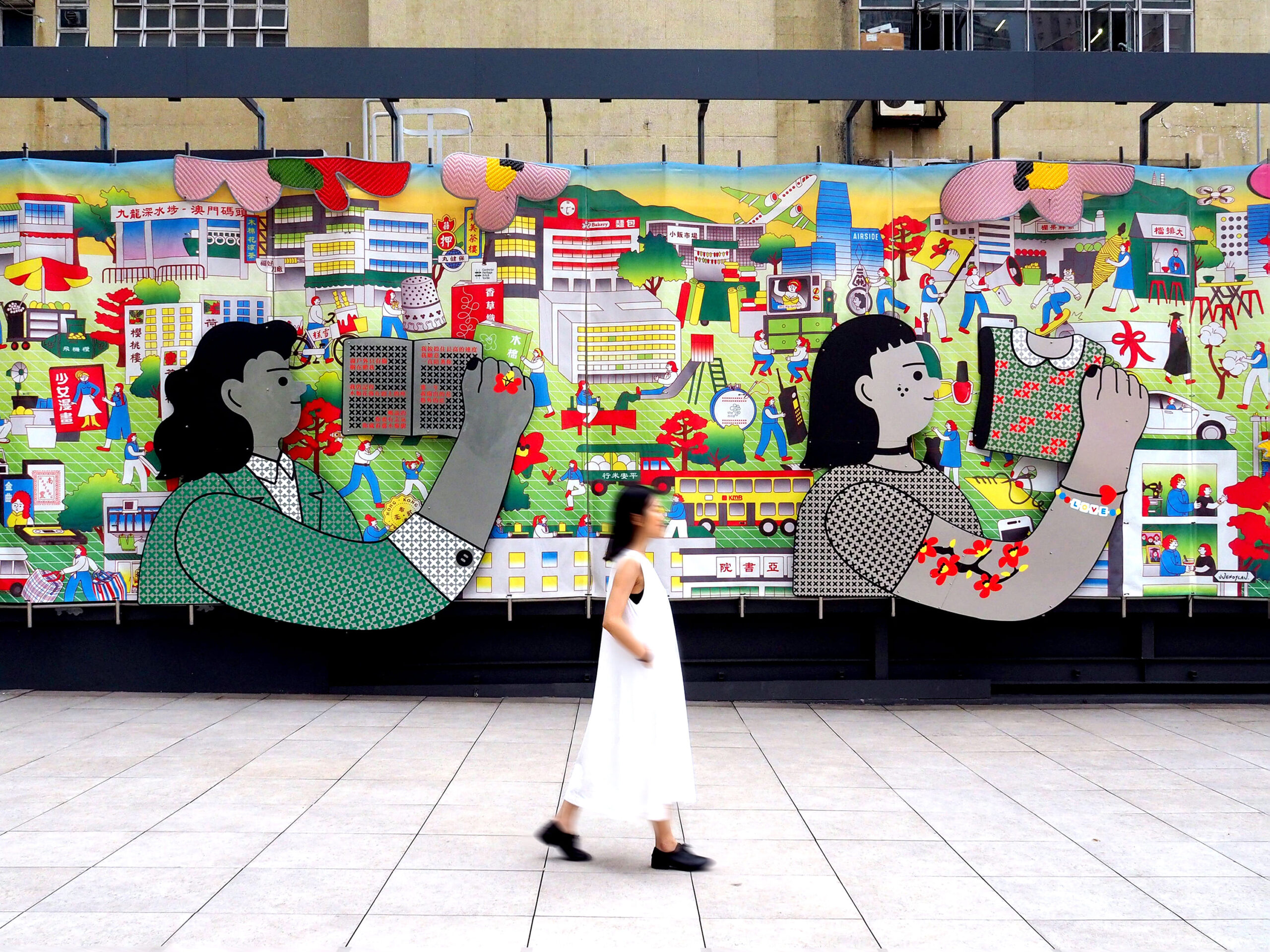
Standing before the 23-metre expanse of “The Weaving Wall – A Love Letter from Kapok,” one is immediately struck by its sheer scale. Yet, for visual artist UUendy Lau (UU), the project’s true heart lies in the intergenerational fragments of a life lived in Tsuen Wan. “The cotton trees and kapok flowers remind me of our connections with family, people, place and nature, and of the need to cherish the fleeting moments right in front of us,” UU reflects. As a local who grew up witnessing the neighbourhood’s industrial evolution, UU has transformed the rooftop garden The Park on the 3/F of The Mills into a continuous visual narrative that presents as both a personal memoir and a public monument. To the artist herself, this is not just an illustration of history, but a living dialogue with her own roots.
Finding personal knots within the city’s urban development
While the mural spans three generations of women in Hong Kong, the most profound connections are found in the intimate details scattered throughout the work. Among the relics of the past, for instance, traditional calendar, piggy banks and letterboxes, one item holds a particular emotional weight: a celebrity magazine titled Po-Chu’s Photobook. “It is a direct reference to my mother’s favourite celebrity, Connie Chan,” UU explains. While the artist belongs to a different era of fandom, the inclusion of the magazine represents a bridge between generations. “My mum devoted her life to our family. Sharing her collectibles and watching her idol’s movies together was a way for me to understand her personal interests outside of her role as a mother.” This connection is further deepened by the inclusion of a local snack called aeroplane olives. UU recalls her mother sharing stories of saving up for the nibbles as a child, eventually buying them for UU so the taste, and the memory, could be passed down.
Documenting evolution and empowerment through the threads of daily life
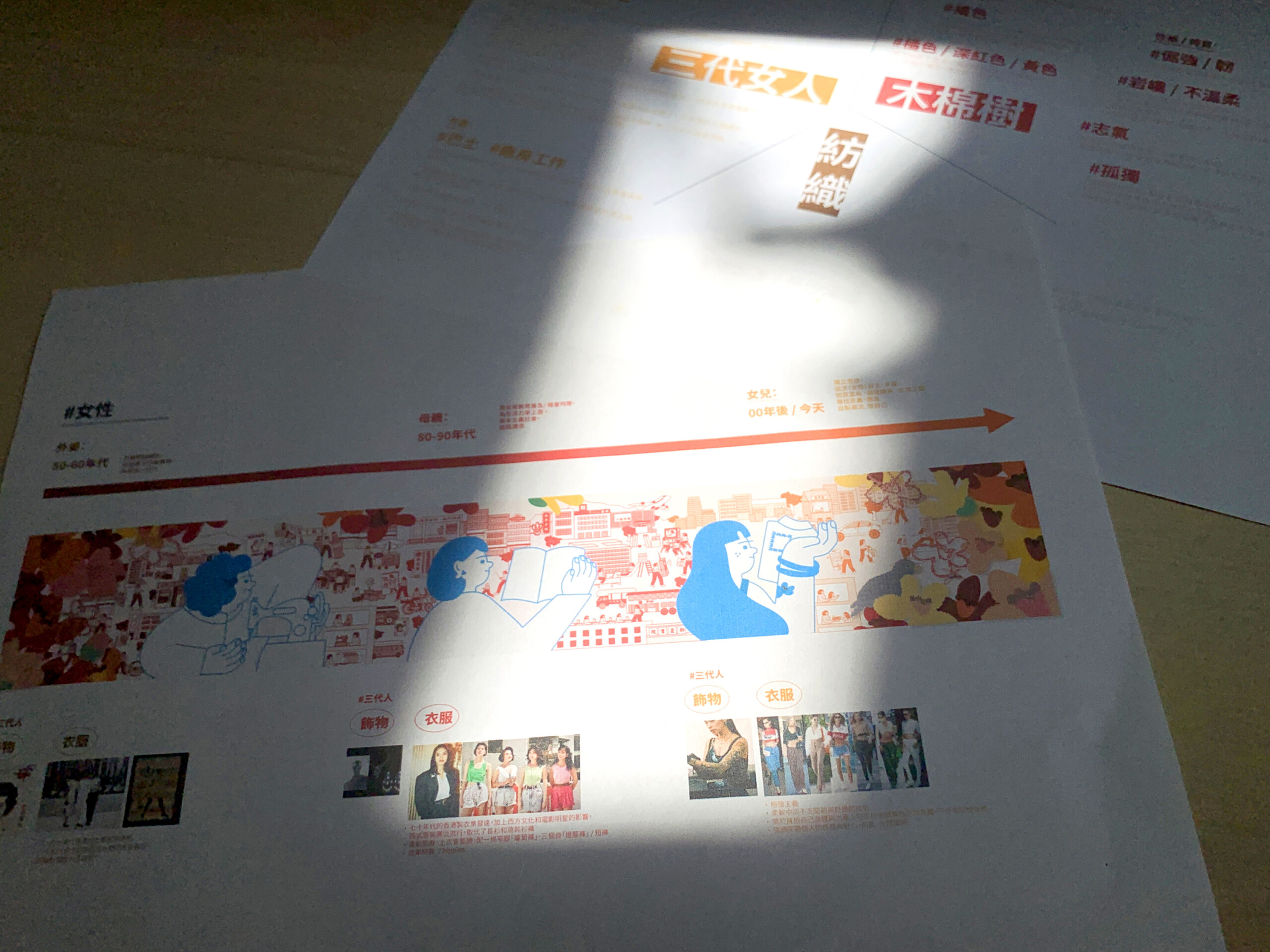
One of the more nuanced layers of the wall installation is the “quieter” narrative tracing the evolution of women’s innerwear, which UU has integrated seamlessly into various scenes. She uses these garments to document a profound shift in autonomy and body image across the decades. Far from being mere background elements, these elements are designed as “relatable surprises” for those who look closer. The artwork captures a transition from a restrained era, exemplified by a humorous scene of a senior lady chasing a man attempting to steal a conservative white bra from a bamboo pole, to one of emerging self-awareness, seen in a glamorous celebrity appearing in lingerie on a retro television. “I wanted these details to be part of the daily graphic, like a little surprise visitors find when they walk close to the wall,” the artist notes. This trajectory culminates in the present day, where young women in sports bras advocate for comfort and empowerment through outdoor yoga.
Mapping resilience through kapok and collective gestures
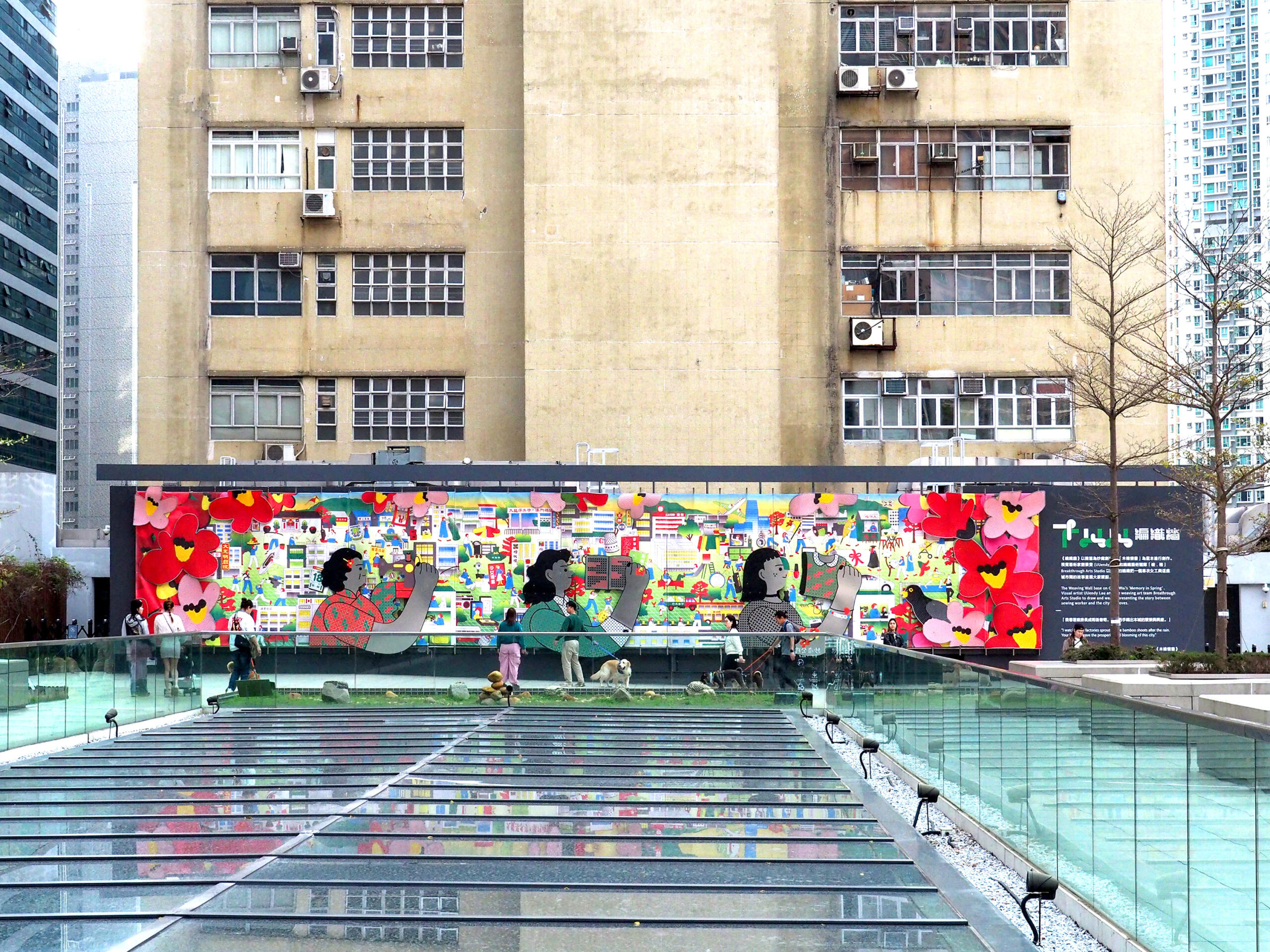
The installation is anchored by three monumental female figures, each sharing a gesture of a raised right arm and a humbly upward gaze. This posture of dignity links the manual labour of the grandmother’s generation to the daughter’s modern search for life’s purpose. While the women provide the narrative core, the kapok flowers provide the soul. UU treats these trees as silent witnesses that have watched over and safeguarded the city’s streets and its textile workers for decades. This visual landscape invites visitors on a little hunt through time: one might spot a vintage sewing machine or a rooftop school scene nestled beside a cotton tree, only to find a bulky style mobile phone or a singer’s cassette tape, objects that have transitioned from daily tools to vintage relics.
Dimensional storytelling: A mixed-media dialogue between illustration, literature and weaving
Curated by the In Time Of team, the project is a mixed-media collaboration serving as a visual wall documentation created by visual artist UUendy Lau in response to the second chapter of Chan Wai’s “Factory Girls Trilogy”. The 23-metre mural also features large-scale 3D woven kapok flowers crafted by local weaving team Breakthrough Arts Studio, which bring a new dimensionality to artwork. “The woven floral panels certainly added new layers to the illustration,” says UU. “It makes the whole piece more dimensional, not just spatially but also contextually, echoing the multiple layers of our real lives, from the transformation of society to the complexities of the mother-daughter relationship.” Standing as a testament to the enduring bond between the city and its textile heritage, the installation is currently open to the public at The Park, The Mills.
Share