2nd round 2024 to 2026 "Visual Diary-Journals Monthly Exchange Project": Introduction
Human (Young Artists) : Human (Elderly with Dementia Challenge)
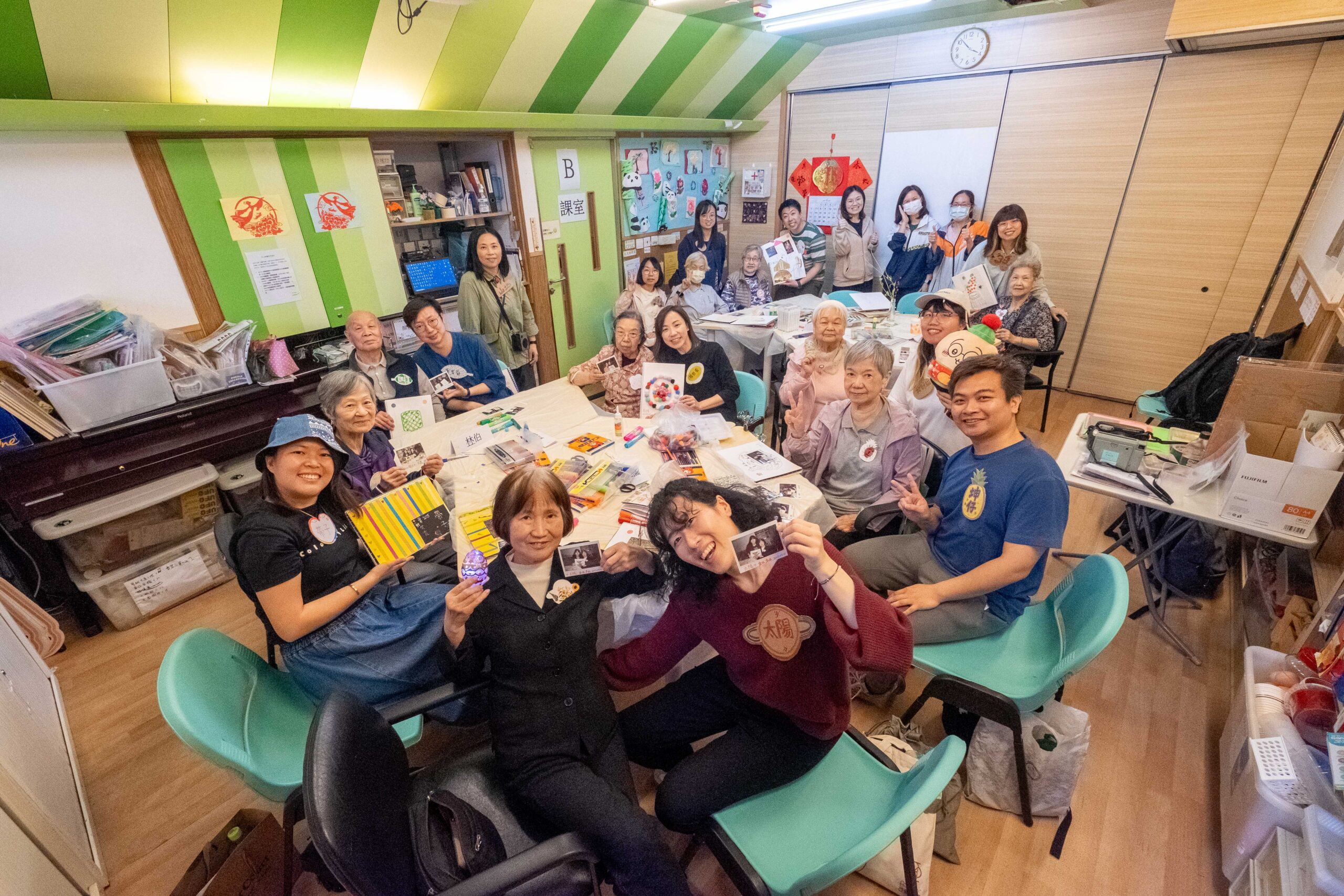
exchange our daily life discoveries, enjoy happiness together,
learn to embrace yourself : “I can do it !”
In the second phase of the “Co-learning Squad“, the interface of “coexistence” is between youth and elderly. Sandy and the NGO “Mind-Delight” have each invited ten young people and ten elderly people to jointly participate in the “Visual Diary-Journals Monthly Exchange Project“.
From September 2024 to March 2025, an elderly person with dementia challenge and a young artist became pen pals through hands-on visual journalling. “Monthly Diary” is in form of a journal drawing book; each of the ten pairs of pen pals opens and owns such a unique journal book as the vessel to record the “monthly visual diary” and to share with each other during the exchange process.
In the beginning, the two in each pair were strangers. Over six months, they both took on the role of “secret friend” and engaged in an ongoing monthly “Visual Diary” creative exchange. Using varied forms of visual art as their language of communication, they shared their everyday life happenings, their thoughts, what they like once a month. In the process, they came to know and affirm themselves—”*I can do it too!”—and tried to savour the magic of creating as a form of emotional expression. The “monthly visual diary” exchange encourages intergenerational communication and friendship, aims to broaden each person’s social circle and horizons, and invites them to learn anew from each other’s perspective and rekindle their curiosity.
P.S. *The general public view of elderly as people who must be “taken care for” makes it easy for them to label themselves, “I can’t do it!”
Over the course of six months, each month Sandy (chief curator/educator) and Kimmy (program assistant) make time to visit the NGO “Mind-Delight” Memory & Cognitive Training Centre, together with the NGO social workers run a “co-learning” group with the ten elderly. They guide the elderly in reading the monthly journals that young people have created for them, correspondingly the elderly would create their own monthly diary in the journal-book to express themselves. We also take the opportunity to facilitate mutual appreciation among elderly on one another’s diary art creation. In addition to sharing the “discoveries” of their daily lives, the elderly also indirectly learn how to live coexistent with dementia, very importantly, to enjoy the moment altogether and to appreciate themselves.
This project also encourages the social workers, the family to have a better understanding on their elderly’s livelihoods and feelings from another perspective. The monthly diary journal books provide the channel for both the elderly and their families to reconnect with one another as well as to revisit their own memories.
Whereas the co-learning themes for the young artists were : how to sustain an ongoing communication with elderly who have memory difficulties; try to understand what parts of “dementia“ matter to you ; and how to face forgetting and to make memory reminder through their own art expertise, see if that could evoke resonance with elderly during the process. Besides, the young artists also explored extending the experience learned from this project to the realm of caring for their own elderly, grandma & grandpa, or even connecting it to their future selves before they grow old.
In the end, both groups have met each other, continued the diary communication further in real person, they have revisited both of the diary-journals reading together. Each youth and elderly person will keep each of their own monthly diary journal book, half part of each pair’s whole exchange records, as memory.
Artistic practice becomes a language for exploration, documentation, and expression (a memory vessel we can return to in the future). By keeping monthly journals, we accumulate records of both parties’ everyday lives, while also fostering an exploratory learning journey on intergenerational “coexistence in everyday life“.
Objectives :
1/ Hope to cultivate the followingabilities :
1.1 Through creative practice: communication = listening + non-verbal expression, and getting to know one another as well as self-understanding.
Through gatherings, try to improve social skills.
1.2 Through the use of both hands-on and five senses based activities : observation and hand-brain coordination.
1.3 Through a six-month continuous plan: perseverance and imagination.
2/ We can express our thoughts and emotions regarding the various events we encounter daily — intergenerational coexistence in everyday life.
(Learn to embrace diverse perspectives, tap into your potential, and believe in yourself)
3/ Extend the experience into one’s social circles including elderly’s family members, youth caring for their own elderly, e.g. grandma & grandpa, social service setting.
Project Participants:
Young Artists: Cecilia AuYeung、Jacky、Vincent、kuen jai、33、Ngan Wing、Winnie Liu、carpark、Alohawasa、Ryan
Elderly from CFSC Mind-Delight: Shek Lan、Man Fong、Uncle Lam、Chin Ling、Kin Lan、Hung Hung、Yung Yee、Ling Choi、Siu Ha、Lai Ying
Project Team:
Chief curator and educator instructor: Sandy Chan
Program Assistant: Kimmy Chan
Collaborative Partner CFSC Mind-Delight Memory & Cognitive Training Centre: Ng Ming Wai (centre manager) + Hannah Chan Hiu Nam + Miss Wu + Miss Ng + Meg Lam
Share